What to Check Before Choosing Industrial Flooring for a Warehouse
A warehouse floor has to do more than look tidy. It supports storage, vehicle movement, cleaning, and daily work, often in the same space. Before choosing industrial flooring for a warehouse, start with what happens on the floor and what condition the existing surface is in. Those answers matter more than the appearance of a sample.
Walk through the warehouse by zone. Aisles used by forklifts face different wear from pedestrian routes or areas beneath static shelving. Note where vehicles turn, brake, or repeatedly cross the same joints. Those locations may place greater demands on a floor than straight travel routes.
Consider both the weight being carried and how it reaches the surface. A loaded pallet left in one place, a pallet jack with small wheels, and a forklift moving throughout the day affect flooring differently. Give a flooring contractor the vehicle types, wheel materials, traffic patterns and expected storage arrangements so the proposed system can be assessed against actual use.
For example, a warehouse may have light foot traffic across most of its floor, but frequent forklift turns beside the dispatch doors. Choosing one finish based on the quieter areas could leave the busiest part poorly suited to its job. The answer might be a different specification for that zone, or a system selected for the more demanding traffic throughout.
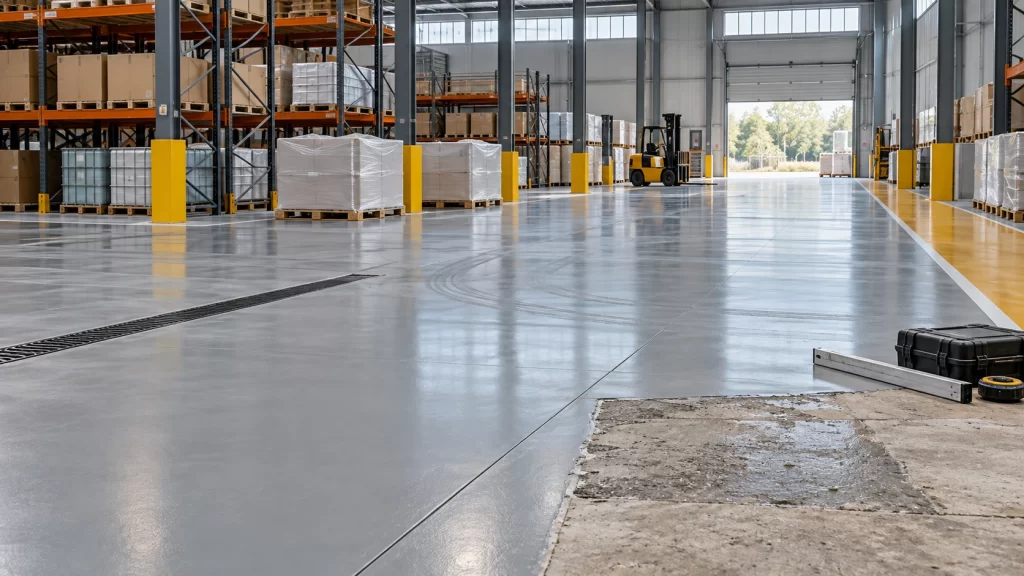
Even a suitable floor coating can perform poorly if the surface beneath it is unsound. Look for cracks, loose areas, worn joints, contamination, and places where water collects. Uneven floors can also interfere with wheeled equipment or make it harder to install a consistent finish. These issues need assessment before anyone settles on a material.
Preparation may involve cleaning, mechanical surface treatment, repairs or leveling. The work required depends on the condition of the substrate and the flooring system selected. Moisture deserves particular attention: a floor that appears dry at the surface may still need testing before a moisture-sensitive coating or covering is installed. Ask how the condition of the slab will be checked and what repairs are included in the proposed scope.
Joints need their own review. They accommodate movement in the concrete and can be vulnerable to repeated wheel impacts. A new finish will not remove the need to account for them. Discuss how existing joints will be treated and maintained, particularly along heavily used routes.
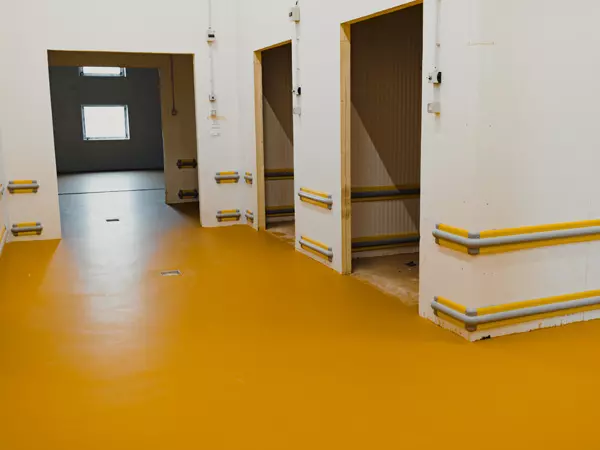
Epoxy and polyurethane coatings are options for industrial floors exposed to mechanical wear. Other finishes, including treated or polished concrete, may suit different priorities. There is no single best warehouse floor: the choice depends on the substrate, traffic, cleaning needs and substances likely to contact the surface.
Think through everyday exposure before comparing products:
A smooth finish may be easier to clean, while a more textured one may be preferable where wet shoes or equipment are common. The decision should reflect the conditions in each zone and how the floor will be used day to day.
The cost of warehouse flooring is more than the price of a material. Surface preparation, repairs, the number of layers, access, and the time an area must stay out of service can all affect the project. Request an itemized proposal that explains the proposed preparation, finish, joint treatment, and any exclusions. This makes competing options easier to compare.
Ask for a realistic sequence of work. Materials can have different application and curing requirements, and a floor may be ready for foot traffic before it is ready for loaded vehicles or shelving. Those times depend on the chosen product and site conditions. If the warehouse must stay open, determine whether work can be phased and where goods and vehicles will move during each stage.
For a warehouse that receives deliveries every morning, resurfacing the main loading route may disrupt more than a larger area used only for storage. Identifying that route early helps shape a practical installation plan. It also gives staff time to arrange temporary access rather than discovering the problem when work begins.
For more detailed information on this topic, read our guide on Wallpaper Installation Planning: Measuring Rolls and Matching Patterns.
Maintenance affects the long-term value of any floor. Find out which cleaning methods and products are appropriate, how damage can be repaired, and whether local repairs will remain visible. Consider how easily staff can inspect cracks, joints and worn traffic lanes once the warehouse is operating.
The strongest choice is a floor system matched to known conditions, supported by appropriate preparation and a workable maintenance plan. Document the loads, traffic, spills, cleaning routine and operational constraints before approving a specification. That gives the flooring contractor a clear basis for recommending a surface and gives you a better way to judge whether it fits the warehouse.